
What Capabilities Should an OEM EV Charger Manufacturer Have?
As the global EV charging market continues to grow, more distributors, charging operators, energy companies, and electrical brands are expanding their product portfolios with private-label AC EV chargers.
Launching your own branded charging solution offers several advantages. It helps strengthen brand recognition, improve profit margins, and build long-term customer relationships. However, the success of a private-label project depends on more than simply finding a factory that can assemble chargers.
A reliable manufacturing partner should be able to support your business from product development to after-sales service. Choosing the wrong supplier may result in certification delays, inconsistent product quality, long lead times, or limited customization options.
If you’re planning to sell AC chargers under your own brand, here are the key capabilities you should evaluate before selecting a manufacturer.
Customization Should Go Beyond Adding Your Logo
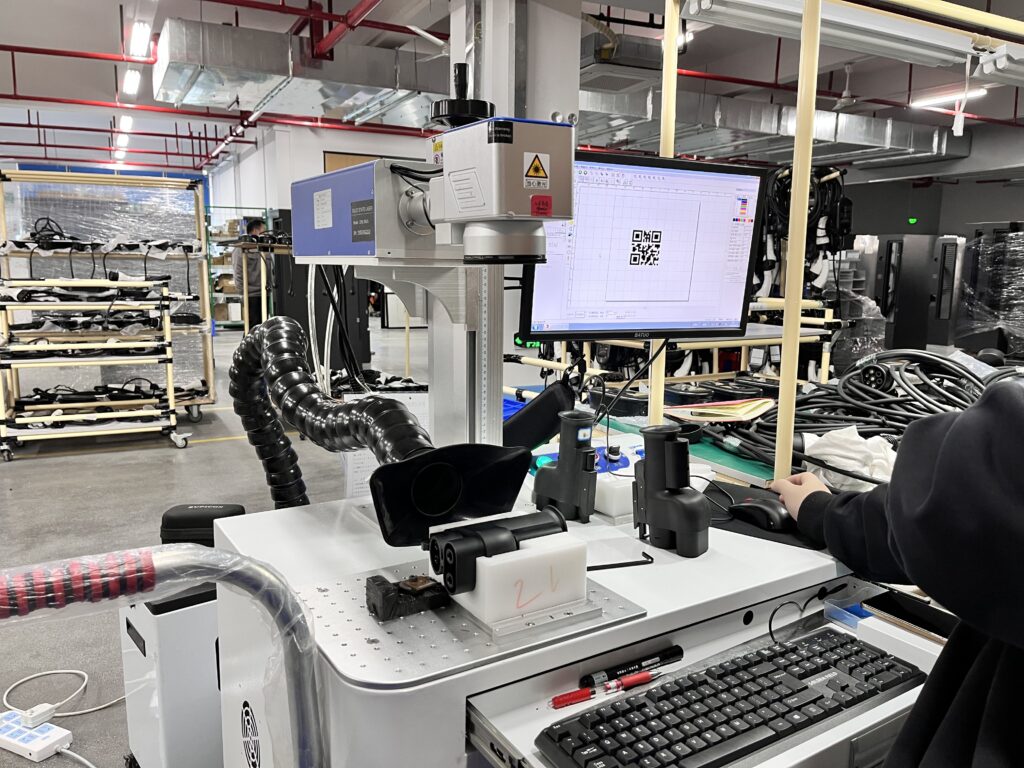
Many suppliers advertise OEM services, but in reality they only offer logo printing.
For a successful private-label project, branding should be integrated into the entire product experience.
An experienced manufacturer should provide customization options such as:
- Housing color and appearance design
- Front panel and enclosure branding
- Packaging and carton artwork
- User manuals and installation guides
- Mobile App interface and branding
- Product labels and nameplates
For companies building a long-term brand, consistency across every customer touchpoint is just as important as the charger itself.
The ability to customize both hardware and packaging demonstrates that a manufacturer understands how branded products are positioned in the market.
Firmware Development Is Just as Important as Hardware
Modern AC chargers are connected devices rather than simple electrical products.
Commercial charging operators often require functions that go beyond standard charging, including:
- OCPP 1.6 or OCPP 2.0 compatibility
- RFID authentication
- Mobile App control
- Dynamic load balancing
- Scheduled charging
- Remote firmware updates (OTA)
- Energy monitoring
- Payment platform integration
These features depend on software and firmware development capabilities.
Manufacturers with in-house R&D teams can adapt software to different market requirements, while factories relying entirely on third-party solutions often have limited flexibility when customization is required.
When evaluating an OEM supplier, ask whether firmware is developed internally and how software updates are managed throughout the product lifecycle.
International Certifications Are Essential for Market Access
Certification is often one of the biggest challenges for private-label projects.
Different markets require different compliance standards, and certification should be considered early in the development process.
Depending on your target region, your manufacturer should be familiar with certifications such as:
- CE for Europe
- UKCA for the United Kingdom
- UL or ETL for North America
- FCC for wireless communication
- RoHS and REACH environmental compliance
In addition to product certifications, manufacturers should also operate under recognized quality management systems such as ISO 9001.
Working with a supplier that already has experience meeting international certification requirements can significantly reduce project timelines and certification risks.
Manufacturing Capacity Determines Delivery Reliability
A successful product launch often depends on whether your supplier can deliver consistently.
Questions worth asking include:
- How many production lines are available?
- What is the monthly production capacity?
- What is the average lead time for OEM projects?
- Can production scale as demand increases?
- How are supply chain risks managed?
A factory with stable manufacturing capability is better prepared to support long-term business growth than a supplier focused only on small-volume production.
Reliable lead times also help distributors maintain inventory and meet customer expectations.
Quality Control Should Cover Every Stage of Production
Product quality directly affects your brand reputation.
For EV charging equipment, quality control should extend beyond final inspection.
A professional manufacturer should implement quality management throughout the production process, including:
- Incoming material inspection
- PCB and component verification
- Assembly inspection
- Electrical safety testing
- Communication testing
- Functional charging tests
- Burn-in testing before shipment
- Final appearance inspection
Comprehensive testing helps reduce warranty claims and improves long-term product reliability.
When discussing potential suppliers, ask about their testing procedures rather than simply requesting a quality certificate.
Flexible MOQ and OEM Support Help Brands Grow
Private-label projects often begin with relatively small orders before expanding into larger production volumes.
An experienced OEM manufacturer understands this growth process and can provide flexible cooperation models.
Important considerations include:
- Reasonable minimum order quantities (MOQ)
- Sample customization support
- Prototype evaluation
- Small-batch production
- Scalable manufacturing capacity
Suppliers that support both pilot projects and mass production are often better long-term partners than factories focused only on high-volume orders.
After-Sales Support Matters Long After Delivery
Manufacturing does not end when products leave the factory.
Commercial charging operators need ongoing technical support throughout the product lifecycle.
Reliable manufacturers should provide:
- Technical documentation
- Installation guidance
- Firmware upgrade support
- Troubleshooting assistance
- Spare parts availability
- Warranty service
- Technical training for distributors
Strong after-sales support reduces downtime and improves customer satisfaction, especially for commercial charging networks.
Why OLINK Is a Reliable Partner for Private-Label AC Charger Projects
OLINK specializes in OEM and ODM manufacturing for EV charging equipment, supporting customers worldwide with customized AC charging solutions.
Our capabilities include:
- Complete OEM and ODM development
- Industrial design customization
- Private-label packaging solutions
- Hardware and firmware development
- OCPP integration
- Mobile App support
- Multiple charging standards including Type 1, Type 2, and NACS
- International certification support
- Strict quality management throughout production
- Stable manufacturing capacity for long-term partnerships
Whether you are an EV charging operator, electrical distributor, energy company, or emerging charging brand, OLINK can help transform your product concept into a market-ready charging solution.
Build Your Brand with the Right Manufacturing Partner
Selecting an AC charger manufacturer is not simply about comparing prices.
The right supplier should become an extension of your business, providing engineering expertise, manufacturing reliability, customization capabilities, and long-term technical support.
For companies planning to develop a successful private-label charging business, choosing a manufacturer with proven OEM and ODM experience is one of the most important decisions you can make.
A capable manufacturing partner will not only deliver products but also help your brand grow in an increasingly competitive EV charging market.
Discuss Your Private-Label AC Charger Project
Looking for an experienced OEM/ODM EV charger manufacturer?
Discuss Custom Branding with OLINK today.
Our engineering and manufacturing teams are ready to help you develop customized AC charging solutions that align with your market, brand, and business goals.
