
Solar-Storage-Charging Solutions for EV Mobility
Connect solar power, battery storage and EV charging around the way people and businesses actually charge electric vehicles. Explore OLINK solutions for homes and commercial sites, with charging equipment at the center of every project.
Illustrative system pathway; energy flows, controls and connected equipment depend on the selected configuration.
A charging-led clean energy category
What Is a Solar-Storage-Charging System?
A solar-storage-charging system links photovoltaic generation, battery storage and EV charging equipment so onsite energy can be used more thoughtfully. For OLINK, this is an extension of our EV charging product range: the goal is to support greener electric vehicle charging, from a private garage to a managed commercial charging site.
Our existing 15/30 kWh stacked system combines solar input, storage, inverter output and AC EV charging. Larger commercial layouts are planned according to site demand, available solar resources, grid capacity and vehicle charging patterns.
Residential Solar EV Charging
Private garages and home parking: use solar generation and storage alongside daily EV charging and household electricity.
Explore home use →Commercial Solar EV Charging
Parking facilities, workplaces, hospitality sites and fleet depots: plan PV, storage and chargers around site loads and vehicle dwell time.
Explore commercial use →Solar EV Charging for Homes
For EV-owning households, the practical question is how to coordinate rooftop solar, household electricity, battery storage and the car's charging schedule. OLINK's residential system is built around that daily charging need.
Charge at Your Own Parking Space
Bring solar generation, home storage and AC EV charging together for a household with a private driveway or garage. Plan charging around driving routines and available energy.
Make Solar Work for Your EV
For a home that already has photovoltaic panels, assess how compatible storage and an EV charger can be added to the electrical layout. Installation and compatibility need site-specific review.
Balance the Home and the Car
Coordinate EV charging with household demand and stored energy. The available scheduling and monitoring functions depend on the selected model and integration.
15/30 kWh Stacked Solar-Storage-Charging System
OLINK's published residential product integrates solar input, battery storage, inverter output and AC EV charging. It provides a starting point for home EV charging projects that also need onsite energy storage.
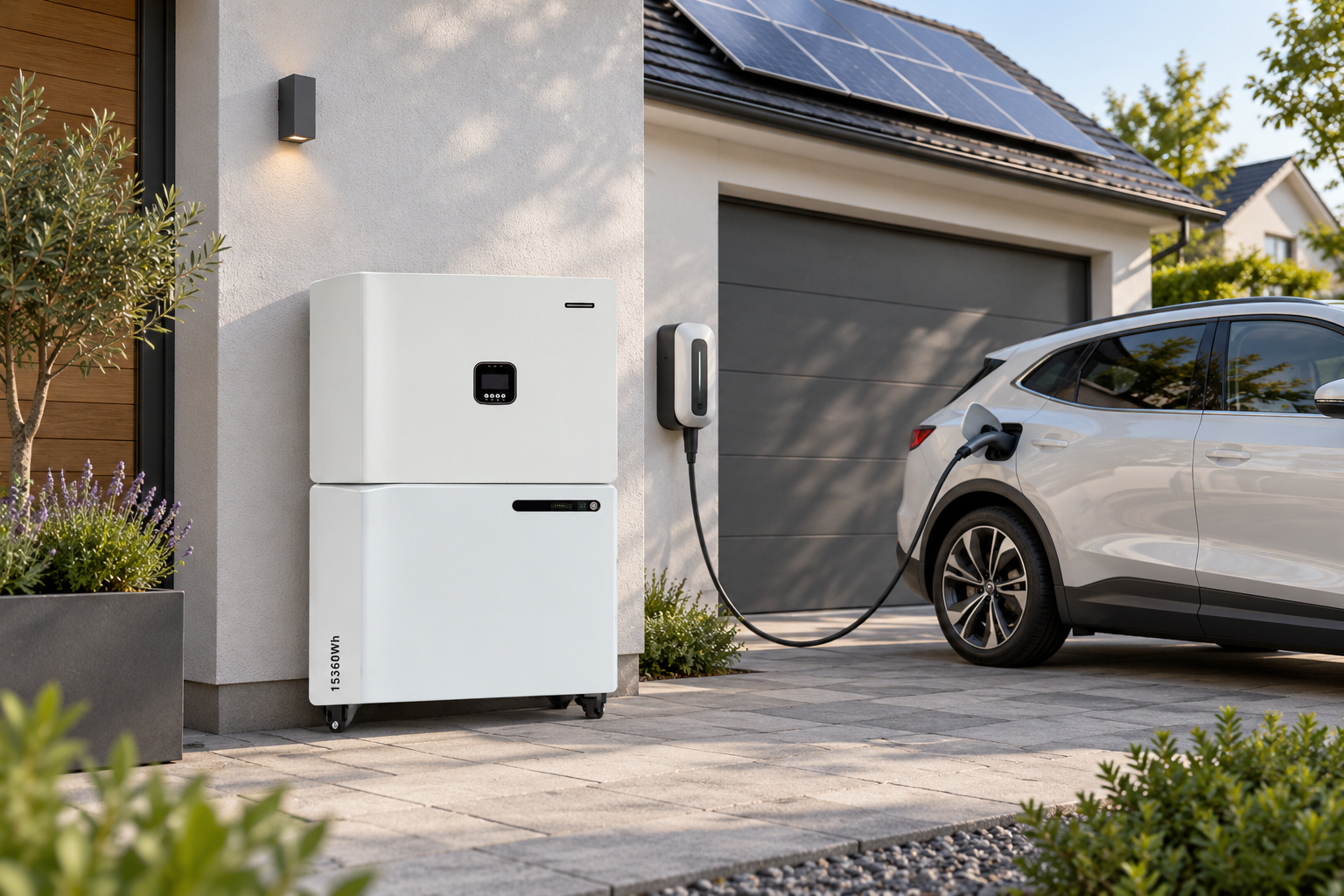
This is a simplified illustration. Grid connection, priority settings, backup operation and charger behavior must be checked for the actual system configuration.
On compatible OLINK systems, the SESC app can show solar generation, battery status, household loads and EV charging information. Available functions vary by model, firmware and project configuration.
Solar, Storage & EV Charging for Commercial Sites
Commercial EV charging sites have different vehicle traffic, parking durations and grid conditions. A solar-plus-storage layout can be evaluated alongside OLINK AC or DC charging equipment to serve the site's actual charging demand and renewable-energy goals.
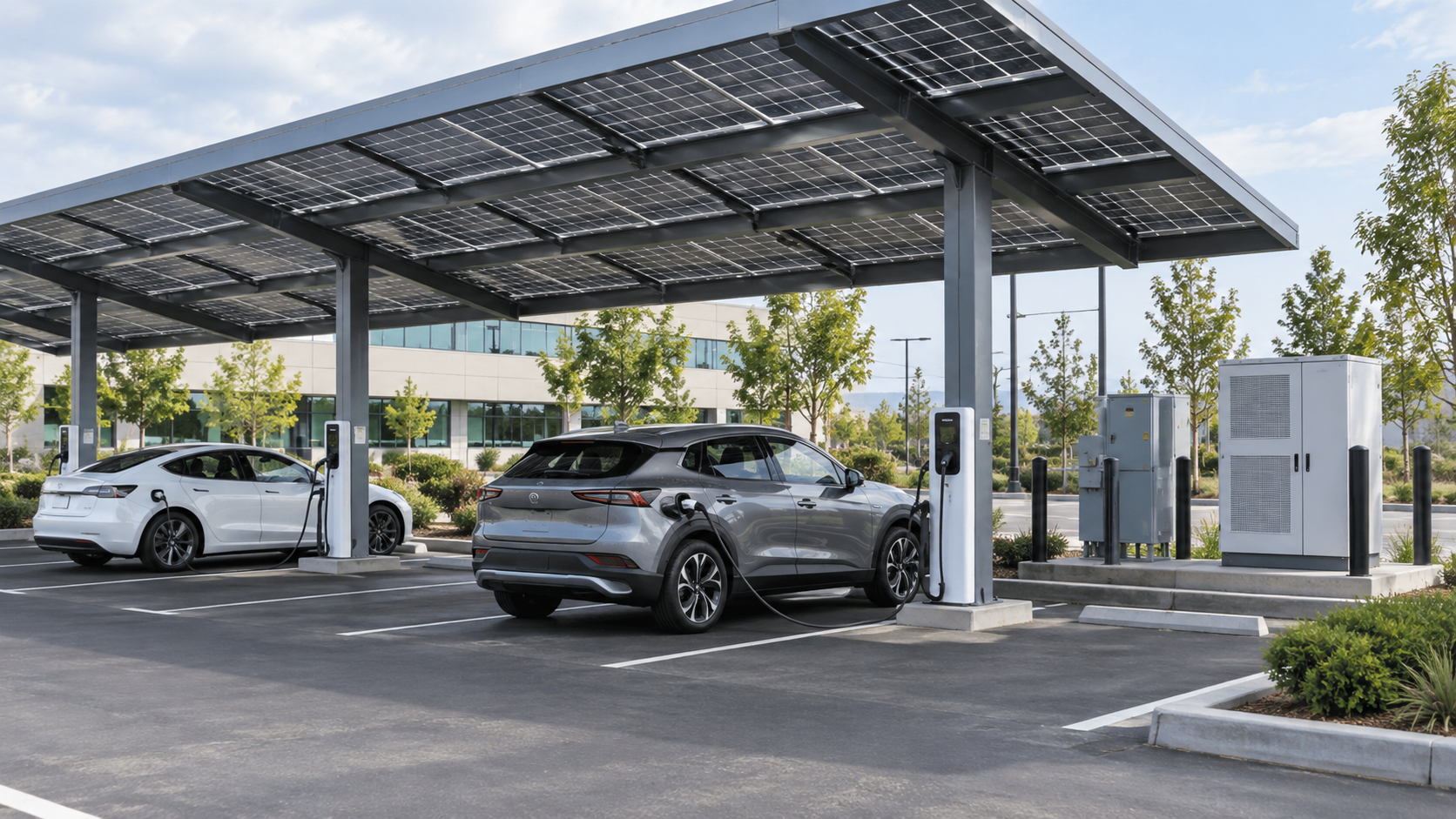
Parking Lots & Solar Carports
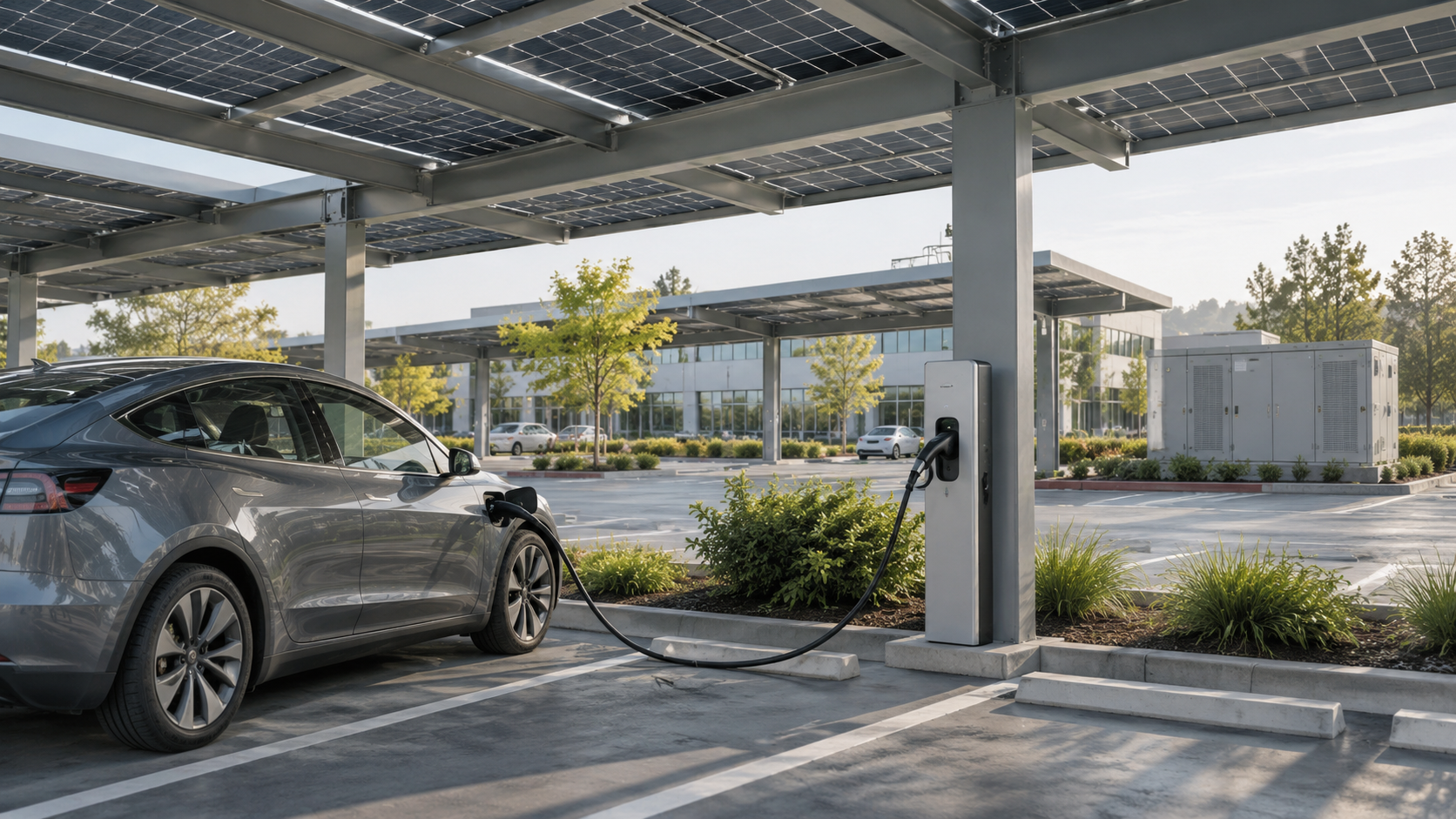
Consider rooftop PV or a solar canopy where space and structures allow. Coordinate charger count, parking turnover and available grid supply before sizing storage or selecting AC/DC chargers.
Employee and Visitor Charging
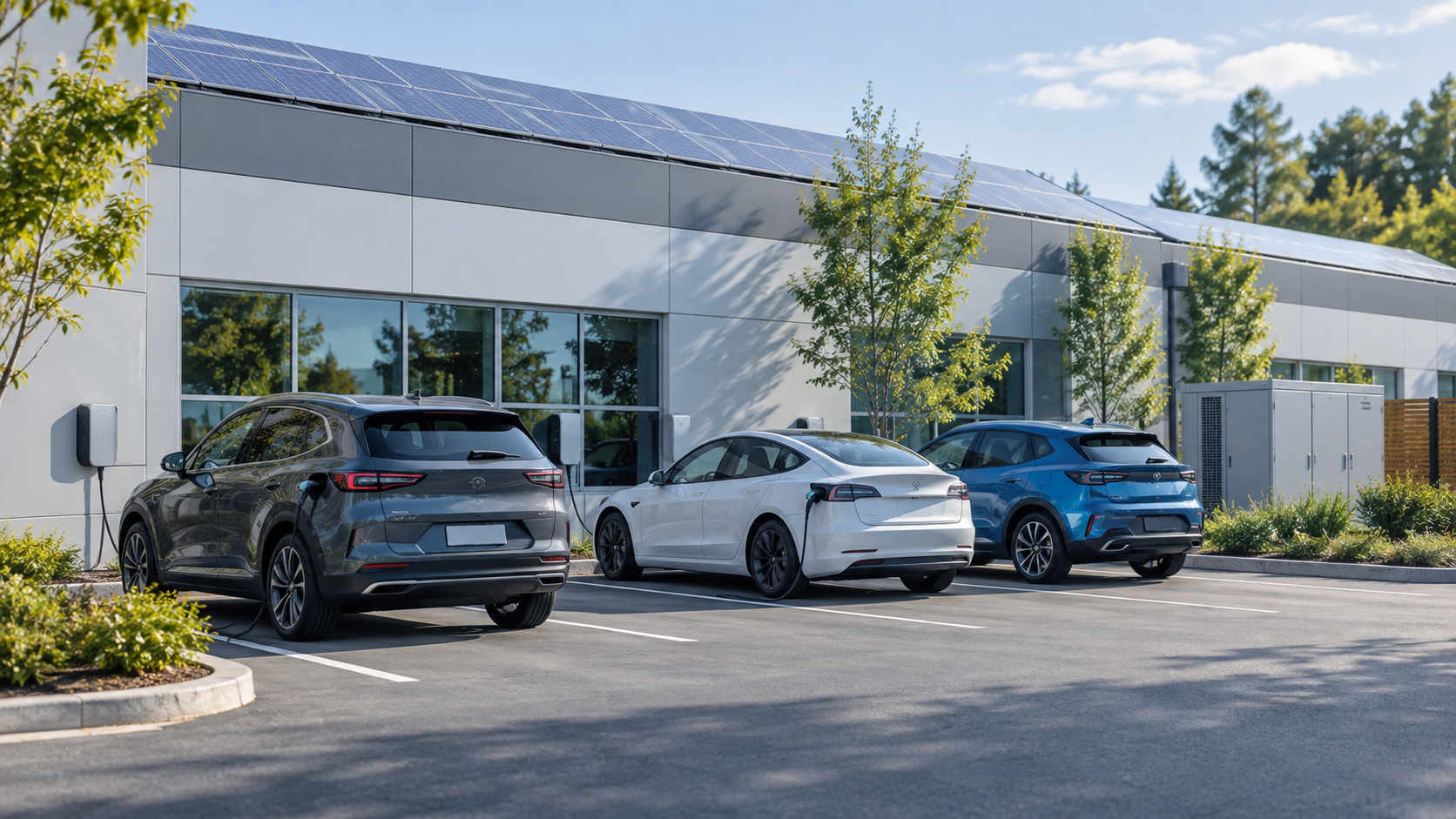
Workplace vehicles often remain parked for hours. Assess how onsite solar generation and energy storage can work alongside AC charging, with DC charging added where shorter charging windows require it.
Destination Charging for Guests
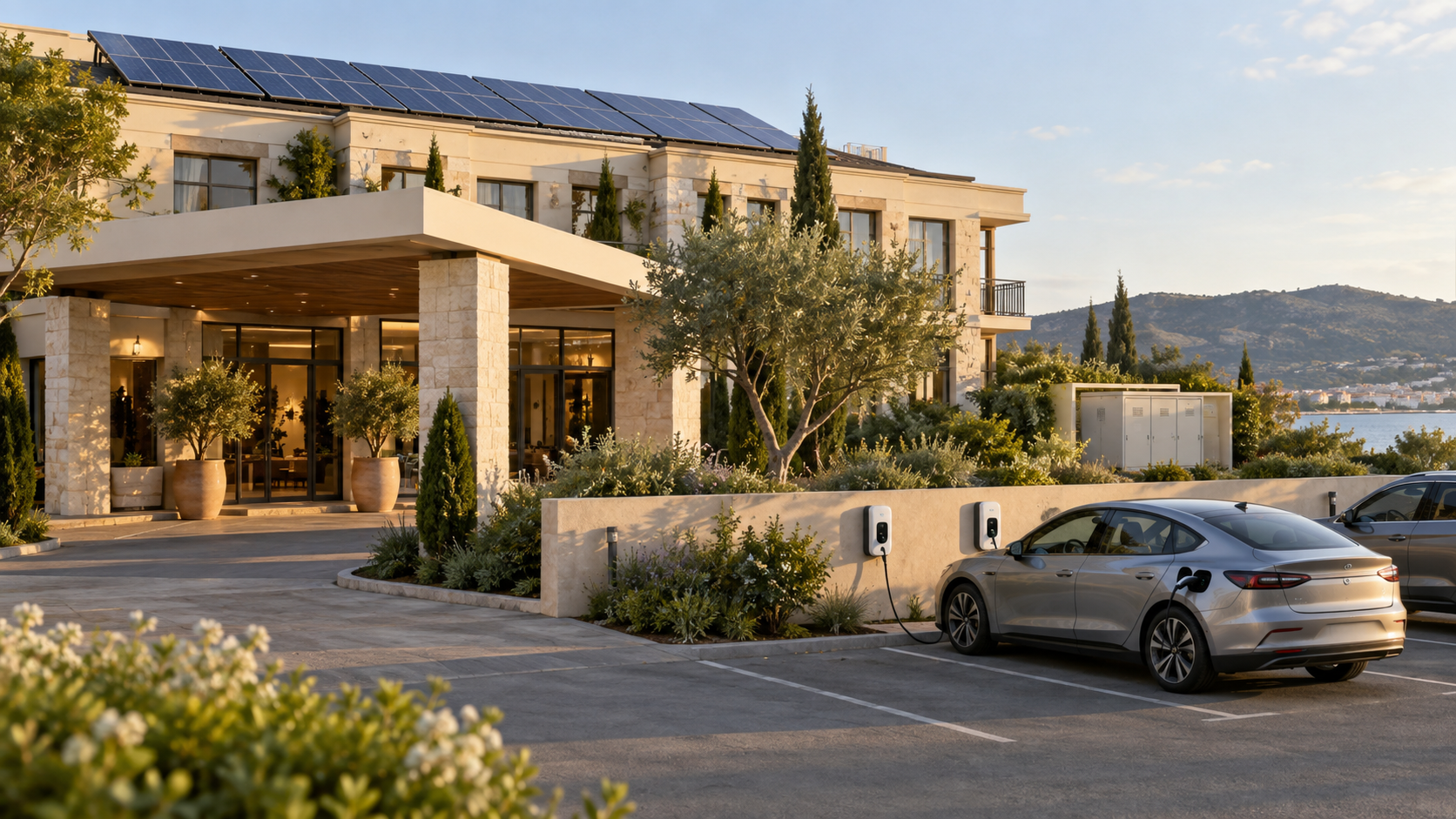
Hotels, resorts and mixed-use properties can plan EV charging with building energy demand. Rooftop or carport PV and storage suitability depends on roof area, site layout and local electrical rules.
Charging Around Vehicle Schedules
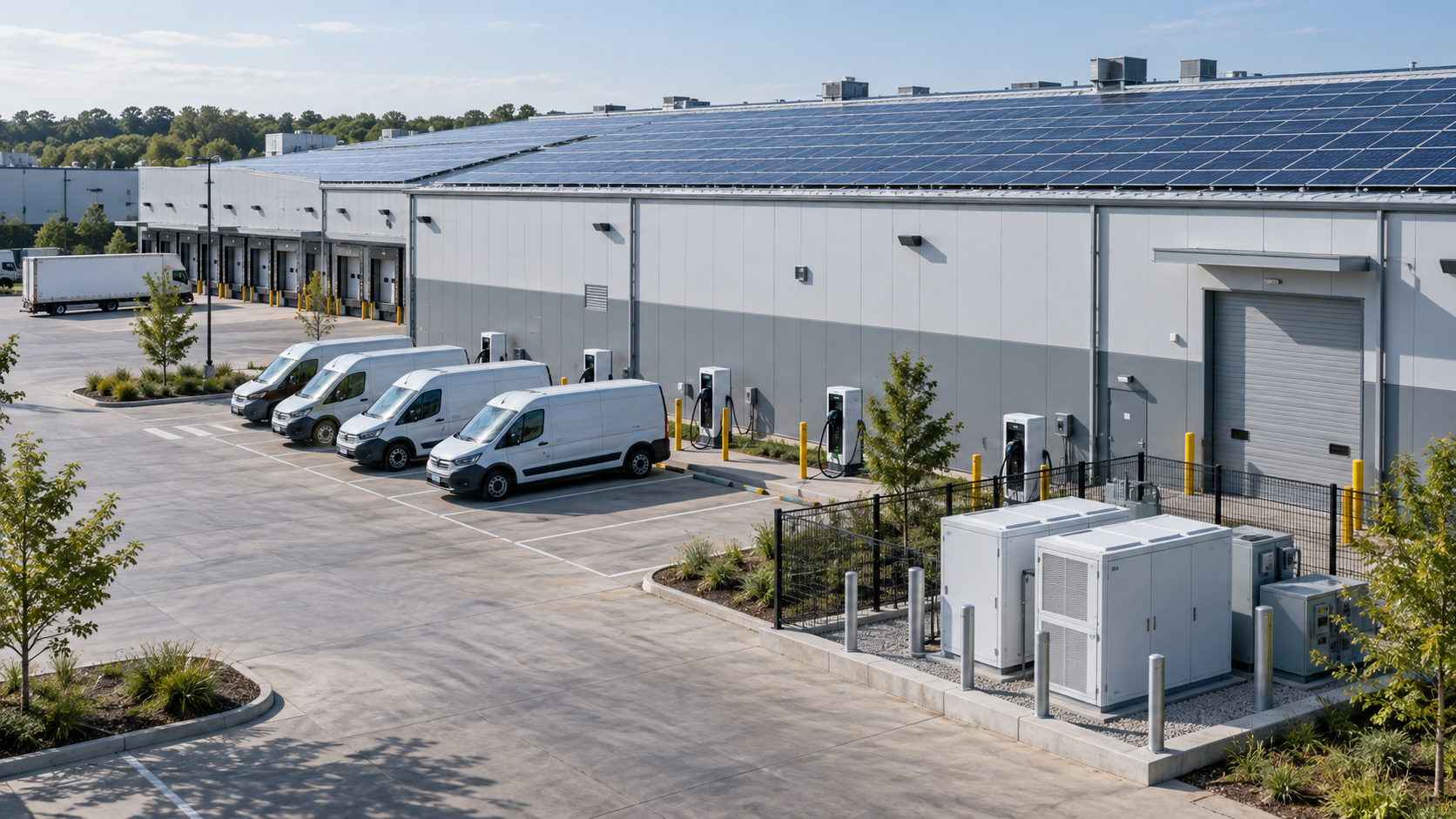
Fleet depots need chargers matched to return times, route schedules and the number of vehicles charging together. Evaluate solar and storage as part of a site-wide power and charging plan.
Start with the Site, Then Size the System
These inputs help determine whether PV, storage and AC or DC charging should be combined in a commercial project.
Vehicles per day, expected charging sessions and dwell time.
Available capacity, existing building loads and peak periods.
Usable roof or canopy area, sunlight and local installation conditions.
Target operating schedule, usable capacity and local tariff structure.
OLINK AC EV Charging Equipment
Explore AC chargers for workplaces, hotel parking, mixed-use properties and longer parking durations. Check the selected model for available control and communication functions.
View AC Charging Stations →OLINK DC EV Charging Equipment
Explore DC chargers for higher-turnover parking and fleet charging. Power level, connector standards and site integration should be selected for the vehicles and electrical capacity.
View DC Charging Stations →Plan a Charging-Led Solar & Storage Project
Share your location, site type, available grid capacity, solar area, EV models, charger quantity and charging schedule. OLINK can discuss a suitable EV charging configuration and the project's solar/storage integration requirements.
Commercial layouts shown here are application examples. Solar equipment, storage capacity, energy management, installation scope and operating results must be confirmed for each project.
From Onsite Solar Power to EV Charging
A project connects solar generation, battery storage, the building's electrical system and EV charging equipment. The grid may also supply power. The control strategy should prioritize the site's charging needs, safety requirements and available energy.
1. Generate
PV panels produce electricity when sunlight is available.
2. Convert & Store
Compatible inverter and battery equipment manage usable energy.
3. Coordinate Loads
System design considers building demand, grid supply and charging priority.
4. Charge EVs
Selected AC or DC equipment serves vehicles at the site.
The arrows explain the system concept, not a fixed physical connection or guaranteed energy-flow priority. Actual operation depends on the inverter, battery, charger, controller and local electrical design.
Daily Home Charging
For a household, start with the EV's usual parking time, home energy use, roof space and an appropriate AC charging arrangement.
- Private garage or driveway
- Household solar and battery visibility on supported configurations
- OLINK's published 15/30 kWh residential system as a product option
Charging Around Site Demand
For a business site, start with charger quantity, expected vehicle traffic, dwell time, grid capacity, facility loads and usable solar area.
- Choose AC or DC charging for the vehicles and parking pattern
- Evaluate storage sizing and operating schedule for the project
- Confirm equipment integration and operator functions before ordering
Built on EV Charging Expertise
OLINK's solar-storage-charging category grows from our EV charging business. We help partners choose the charging equipment and connection standards first, then review how compatible solar and storage components can support the planned site.
AC and DC Charging Portfolio
Select charging equipment according to dwell time, vehicle traffic and the power available at the location.
Explore AC products →Multi-Standard EV Connections
Discuss the connector standards required by the vehicles in your market, including CCS1, CCS2, NACS, GB/T, J1772 and Type 2.
Explore DC products →Published Home Energy System
Start residential conversations with OLINK's existing 15/30 kWh system integrating solar input, storage and AC EV charging.
See home system →Compatible Smart Functions
Ask about SESC home-energy visibility and charging management on selected compatible products; commercial platform capabilities are separately confirmed.
Explore SESC →OEM / ODM Options
Discuss product branding and hardware or software requirements for your market. Scope depends on the selected model and order.
Discuss customization →Technical Review
Check charger selection, electrical interfaces, communication needs and compatibility with the proposed energy system before procurement.
Talk to OLINK →From Site Brief to Charging Configuration
The right PV and storage design starts with the vehicles and the charging site. Share the project details so equipment and integration requirements can be reviewed together.
Location, home or commercial use, roof/carport space and electrical capacity.
Vehicle standards, AC/DC preference, charger count and expected sessions.
Discuss compatible solar/storage equipment, controls and local installation responsibilities.
Company-level experience and certifications do not establish certification or compatibility for every solar, battery or charging product. Confirm documentation for the exact model and destination market.
Questions EV Charging Buyers Ask
Straight answers about using solar and storage for home and commercial EV charging.
What is a solar-storage-charging system for EVs?
It combines photovoltaic generation, battery storage and EV charging equipment in a site-specific electrical arrangement. The grid and building loads may also be part of the system. The purpose is to make suitable onsite energy available for electric vehicle charging.
Can a home EV charger use solar energy stored in a battery?
It can when the solar, inverter, battery and charger are connected in a compatible, correctly installed configuration. Charging priority and the amount of solar energy used depend on the controls, solar output, battery state and household demand.
Does OLINK offer a home solar-storage-charging product?
Yes. OLINK lists a 15/30 kWh stacked system with solar input, storage, inverter output and AC EV charging. Confirm the exact model, electrical specifications and suitability for your market before ordering.
Which commercial sites can evaluate solar plus storage for EV charging?
Commercial parking lots, workplaces, hotels, mixed-use properties and fleet depots can evaluate it. Suitable equipment and system sizing depend on site loads, available solar area, grid capacity, vehicle traffic and charging windows.
How should a site choose between AC and DC charging?
Begin with how long vehicles park, how much energy they need per session, how many may charge together and the site's available power. Longer parking windows often suit AC charging; shorter windows or higher turnover may call for DC charging. Confirm charger power and vehicle compatibility for the project.
Can storage guarantee charging during a grid outage?
No blanket guarantee applies. Backup operation depends on the system design, inverter capabilities, usable battery energy, safety controls and whether the chosen EV charger is supported in that operating mode. Confirm any outage requirement in the project design.
Can the SESC app monitor a home energy system?
Selected compatible OLINK systems can show solar generation, battery status, household loads and EV charging information. Functions depend on the model, firmware and communication configuration; see the SESC app page.
What information is needed to request a commercial project proposal?
Provide the country and site type, expected EV traffic, vehicle connector standards, charger quantity, grid capacity, available roof or canopy area, desired storage use and target charging schedule. These details allow a more useful equipment and integration discussion.
Tell Us About Your Solar & EV Charging Site
Whether you plan a household system or a commercial charging location, share the vehicle and site requirements first. OLINK will discuss relevant charging products and what must be confirmed for solar/storage integration.
- Company name and country / home or commercial use
- EV models and charging connector standards
- Expected charger quantity and AC/DC preference
- Grid capacity and available solar installation area
- Planned charging times and storage objective
- Expected project quantity or rollout schedule