
As electric vehicles become more common, the need for reliable and flexible charging infrastructure is growing fast. Whether you are operating a home charger or managing a large-scale dc charging station, communication between the charger and its software system is critical. This is where OCPP, or Open Charge Point Protocol, comes in. OCPP is an open communication standard that allows EV chargers and central management systems to work together smoothly, even if they are made by different companies. Instead of being locked into one vendor, businesses and operators can choose the hardware and software that best fit their needs. In simple terms, OCPP acts like a shared language that keeps everything connected and running efficiently. Understanding how OCPP works is essential for anyone involved in EV charging, from beginners to industry professionals.
What Does OCPP Stand For?
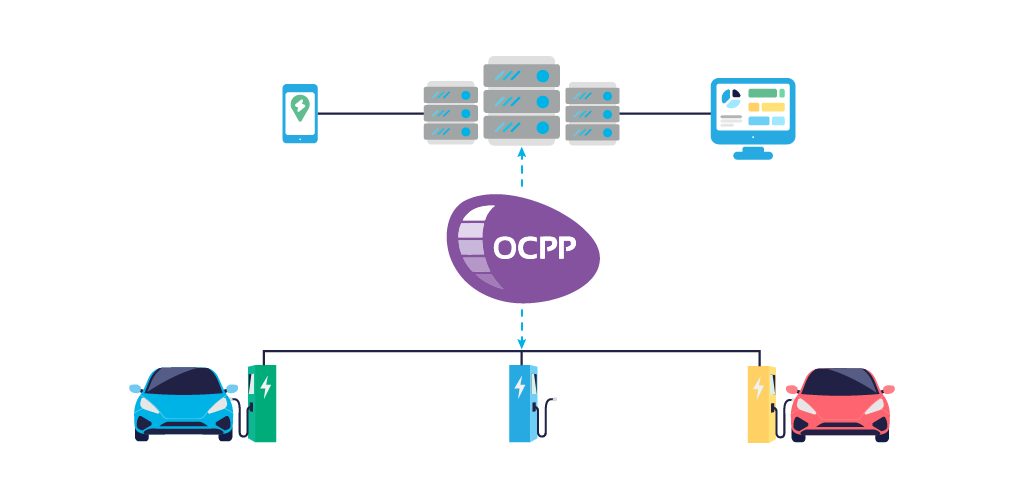
OCPP stands for Open Charge Point Protocol, an open communication standard that enables EV charging stations to connect and exchange data with central management systems. In simple terms, it acts as the common language that allows chargers and software platforms to work together smoothly.
Full Name and Definition
OCPP, or Open Charge Point Protocol, is officially defined as an open communication protocol designed for EV chargers and backend systems. It allows charging stations—whether a home unit or a public network—to send and receive data such as charging status, user authentication, and billing information. Today, OCPP is considered the“de facto standard”
for EV charging communication worldwide (Open Charge Alliance), helping ensure compatibility across different manufacturers. This standard supports the rapid growth of EV infrastructure, as the global number of public charging points exceeded 3 million in 2023 (IEA).
Simple Analogy (Easy Understanding)
To make it easy to understand, think of OCPP as the shared language between a phone and the internet. Just as different smartphones can connect to the same network, OCPP allows different charging stations and software systems to communicate without issues. This makes it easier for operators to manage chargers and expand their networks without technical barriers.
What is OCPP? (Simple Explanation)
OCPP is a standard “language” that allows EV charging stations and software systems to communicate and work together smoothly.
OCPP in One Sentence
OCPP (Open Charge Point Protocol) is an open communication protocol that connects EV chargers to central management systems, enabling real-time data exchange and control. It is widely used across the industry and supports key functions like monitoring, billing, and remote operation.
Core Concept: “Common Language”
The core idea behind OCPP is interoperability. It allows charging stations from different manufacturers to connect with various software platforms without compatibility issues. This helps operators avoid vendor lock-in and choose the best hardware and software freely. Today, OCPP is used in over 137 countries globally (Open Charge Alliance, 2025), and more than 70% of charging stations are OCPP-compliant (industry estimate, 2024), showing how widely it has been adopted.
Key Components
OCPP works through two main parts: the charger (also called EVSE) and the central system (CSMS). The charger sends data such as status and energy usage, while the CSMS manages operations, users, and payments. Together, they create a connected and scalable charging network.
Why OCPP Matters in EV Charging
OCPP matters because it makes EV charging networks more flexible, scalable, and cost-effective by allowing different systems to work together seamlessly.
Interoperability (Most Important)
OCPP enables chargers from different manufacturers to communicate with various software platforms, making it a true industry standard. This interoperability allows operators to build mixed networks without compatibility issues. Today, OCPP is used in 137 countries worldwide (Open Charge Alliance, 2025) and is widely recognized as the global standard for charger-to-backend communication.
Vendor Independence
With OCPP, businesses are not locked into a single supplier. Operators can switch hardware or software providers without replacing the entire system. This open approach reduces risk and encourages competition, which drives innovation across the EV charging industry .
Cost Efficiency
OCPP lowers integration and operational costs by standardizing communication. Studies show it can deliver up to 45% lower integration costs (Accenture, 2024) by simplifying system connections and reducing complexity.
Scalability
OCPP supports large-scale deployments, from small installations to city-wide networks. Standardization makes it easier to expand infrastructure as EV adoption grows rapidly, with millions of new EVs entering the market each year.
Future-Proof Technology
OCPP supports advanced features like smart charging and energy management. Newer versions also enable integration with technologies such as V2G (vehicle-to-grid), helping operators prepare for future energy systems.
How Does OCPP Work?
OCPP works by creating a real-time communication link between an EV charger and a central system, allowing them to exchange data and control charging sessions remotely.
System Architecture
At its core, OCPP uses a simple client-server structure. The charger (also called the Charge Point) connects to a backend system known as the Charging Station Management System (CSMS). This connection is usually made through the internet or cloud servers, enabling operators to monitor and control chargers remotely. This two-way communication model is the foundation of modern EV charging networks.
Communication Method
OCPP typically uses WebSocket connections with JSON message formats. This allows continuous, real-time communication between the charger and the backend system. The charger initiates the connection and keeps it active, so both sides can send messages instantly, such as commands or status updates.
Step-by-Step Charging Process
A typical charging session follows several steps. First, the user plugs in the vehicle, and the charger connects to the system. Then, user authentication takes place through an app, RFID card, or other method. Once approved, the system sends a command to start charging. During the session, the charger continuously sends meter data and status updates for monitoring and billing. When charging is complete, a stop command is issued, and the final data is recorded for payment. OCPP defines all these messages, such as start, stop, and meter values, ensuring smooth operation.Today, this system supports millions of charging points globally (OCPP Lab, 2025), showing how widely this communication model is used in real-world networks.
Key Features of OCPP
OCPP provides a set of powerful functions that make EV charging stations smarter, easier to manage, and more reliable for operators and users.
Remote Control
One of the core features of OCPP is the ability to start and stop a charging session remotely. Operators can send commands from the backend to control individual chargers without visiting the site, which helps reduce maintenance time and improve uptime. This capability is now standard in most large charging networks (Open Charge Alliance, 2025).
User Authentication
OCPP supports multiple methods for user authentication, such as RFID cards, mobile apps, and QR codes. This allows operators to verify drivers before initiating charging, ensuring secure access and personalized billing. It also aligns with growing user expectations for seamless EV charging experiences.
Billing & Payment Support
OCPP can exchange data needed for billing and payment logic, including meter values and session details. This feature allows charging operators to integrate with payment systems and automatically calculate costs based on usage, making EV charging commercially viable and transparent.
Monitoring & Diagnostics
Real-time status monitoring and fault diagnostics are built into OCPP. Chargers can send diagnostics data to backend systems for predictive maintenance, helping reduce downtime and repair costs. This is especially valuable for networks with hundreds or thousands of charging points.
Firmware Updates
OCPP supports over-the-air (OTA) firmware updates, allowing operators to push software improvements and security patches remotely. This keeps chargers up to date with minimal manual intervention, which is crucial as EV charging technology evolves quickly.
Overall, OCPP’s feature set supports remote control, real-time data, and advanced management across diverse charging stations, helping operators run efficient and scalable networks.
OCPP Versions Explained
OCPP has several versions, each improving on the last to support more features, better security, and future-ready technologies.
OCPP 1.6 (Most Widely Used)
OCPP 1.6 is currently the most widely used version in EV charging networks around the world. It provides core functions like remote start/stop, meter value reporting, and basic session control. Because it is stable and well supported, many existing charging stations still rely on it, making it the industry workhorse for standard communication.
OCPP 2.0.1 (Advanced Features)
OCPP 2.0.1 builds on 1.6 by adding stronger security features and support for smart charging functions, such as load balancing and better diagnostics. These enhancements help operators manage energy use more efficiently and securely, especially in larger networks.
OCPP 2.1 (Latest Version)
The newest version, OCPP 2.1, includes support for vehicle-to-grid (V2G) and deeper integration with energy markets. This allows bidirectional charging, where EVs can send energy back to the grid, and paves the way for advanced energy services as EV charging infrastructure becomes part of the broader energy system.
Version Comparison Table
Below is a simple comparison of the main OCPP versions and their focus areas:
| Version | Adoption | Key Strengths |
| 1.6 | Most common | Basic interoperability and stability |
| 2.0.1 | Growing | Enhanced security & smart charging |
| 2.1 | Emerging | V2G support & energy market readiness |
These versions show how OCPP has evolved from basic messaging to a modern standard that supports future energy needs, reflecting its importance in the global EV charging ecosystem. According to the Open Charge Alliance, OCPP 2.x adoption is increasing rapidly as networks modernize (Open Charge Alliance, 2025).
OCPP vs OCPI: What’s the Difference?
OCPP and OCPI are both important standards in EV charging, but they serve different purposes: OCPP connects charging hardware to backend systems, while OCPI enables data exchange between networks.
What is OCPI?
OCPI (Open Charge Point Interface) is a protocol designed for communication between different charging networks and service platforms. It allows roaming, meaning EV drivers can access chargers from multiple networks with a single account. OCPI supports session details, pricing information, and availability data between operators. According to industry sources, OCPI is widely adopted by major roaming platforms in Europe (Open Charge Alliance, 2025), helping unify access across networks.
Key Differences
The main difference lies in what each protocol connects. OCPP focuses on the link between the charger and its management system, enabling real-time control and monitoring of charging points. In contrast, OCPI operates at the network-to-network level, exchanging data among service providers, roaming platforms, and aggregators.
When to Use Each
Use OCPP when you need to manage and control individual charging stations or an entire fleet of chargers. Use OCPI when you want to support roaming services that let EV drivers access chargers across different networks with one app or account. OCPI essentially makes EV charging networks talk to each other, expanding driver access beyond a single operator’s system.
Who Uses OCPP?
OCPP is used by different groups across the EV charging industry to ensure smooth communication and system interoperability.
Charger Manufacturers
Charger manufacturers implement OCPP in their devices so that their hardware can connect seamlessly to different backend systems. By supporting OCPP, brands like ABB, Siemens, OLINK and others allow their charging stations to work with many software platforms, increasing their market reach and compatibility. This broad manufacturer adoption supports the protocol’s global growth.
Charge Point Operators (CPOs)
Charge Point Operators (CPOs) rely on OCPP to manage networks of charging stations. Whether running a small local network or a nationwide dc charging station system, CPOs benefit from OCPP’s ability to control, monitor, and update chargers remotely. Industry reports show that a large majority of public charging networks worldwide use OCPP-compliant equipment (Open Charge Alliance, 2025), which helps reduce operational complexity.
Software Providers
Software providers build the backend systems that connect to chargers using OCPP. These platforms handle tasks such as user authentication, billing, analytics, and diagnostics. By adopting OCPP, software companies can support many brands of chargers and offer flexible solutions to CPOs and energy partners.Together, these three groups form a strong ecosystem that drives widespread adoption of OCPP in the EV charging market.
Real-World Use Cases of OCPP
OCPP is widely used in real EV charging environments to enable centralized management, data sharing, and efficient operations across many types of charging deployments.
Public Charging Networks
In public charging networks, operators use OCPP to connect thousands of chargers to central systems that monitor performance and usage. This allows drivers to find, start, and pay for charging through apps, and helps operators manage station uptime. According to industry data, public charging points in leading markets often exceed 70% OCPP compliance, showing broad support for the protocol.
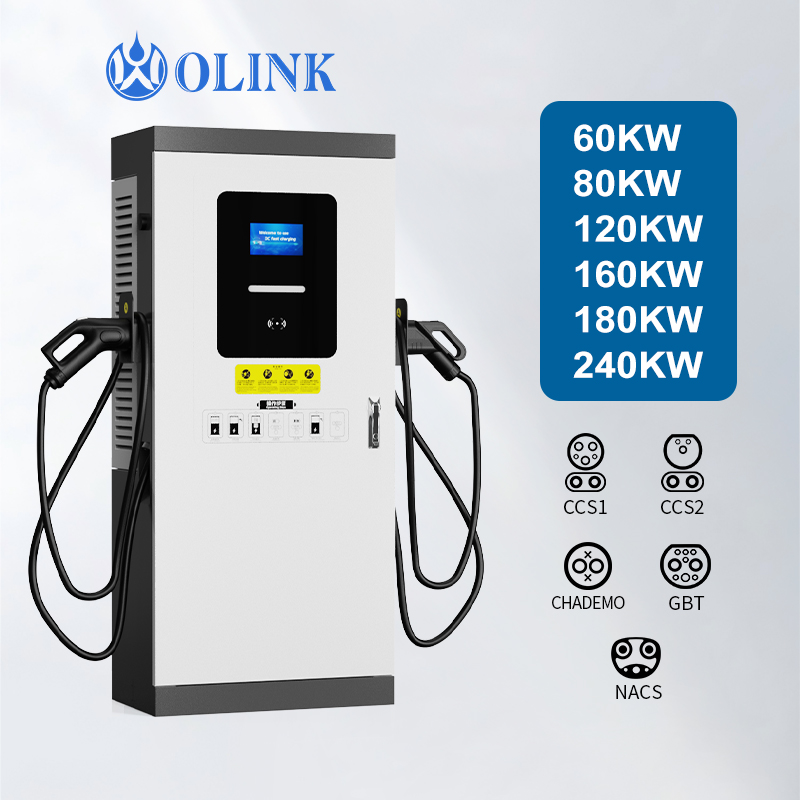
In real-world deployments, operators often rely on high-power DC fast chargers to improve station utilization and reduce charging time. For example, solutions like the OLINK DC Fast Charger 60kW–240kW Dual Gun are designed for commercial scenarios, supporting OCPP-based communication for seamless integration with different backend systems, while enabling dual-vehicle charging to maximize throughput in busy locations.
Fleet Charging
For fleet charging, companies with electric fleets rely on OCPP to schedule and control multiple chargers at depots and workplaces. OCPP allows fleet managers to track energy usage, plan charging around work shifts, and integrate with energy management systems, reducing costs and improving reliability.
Commercial Buildings
In commercial buildings, property owners deploy OCPP‑enabled chargers to offer services to tenants or visitors. OCPP helps these sites manage user access, gather billing data, and push firmware updates remotely. This centralized control is essential for multi‑tenant environments where usage and billing must be tracked accurately.
Smart Energy Management
OCPP also plays a role in smart energy management by connecting chargers to systems that balance load against building demand or renewable energy availability. This use case supports better grid interaction and energy cost savings, especially as more smart charging and V2G capabilities are adopted in the industry.These examples show how OCPP’s open communication helps real charging networks operate more effectively.
Benefits of OCPP for Businesses
OCPP gives businesses real advantages by making EV charging operations more profitable, efficient, and flexible for growth.
Higher ROI
OCPP enables higher charger utilization and revenue opportunities. Companies can manage mixed fleets of chargers and grow without being tied to one vendor. According to industry reports, operators using OCPP have seen double-digit increases in utilization rates within the first year (EV industry reports, 2024). Open standards allow better network control, pricing strategies, and demand management.
Operational Efficiency
OCPP improves operational efficiency through remote monitoring, diagnostics, and firmware updates. This reduces manual maintenance, cuts downtime, and lowers service costs, helping operators provide reliable service to EV drivers.
Flexibility in Vendor Selection
Businesses gain flexibility by being able to choose hardware and software from multiple providers without compatibility issues. This reduces vendor lock-in and encourages competitive pricing, allowing operators to optimize their networks.
Scalability for Expansion
OCPP supports scalable network growth. As EV adoption rises, open protocols allow operators to expand networks quickly and integrate advanced features like smart charging and demand response without major system redesigns.These benefits help businesses maximize revenue while building a future-ready EV charging infrastructure.
Limitations of OCPP
While OCPP offers many advantages, it also has some limitations that businesses and operators should consider before implementation.
Requires Backend System
OCPP relies on a centralized backend system (CSMS) to function properly. Chargers cannot operate at full capability without this system, which adds cost and infrastructure requirements. Small operators may find this setup challenging, especially when deploying a few chargers.
Implementation Complexity
Integrating OCPP into existing networks can be technically complex. It requires knowledge of communication protocols, message handling, and security features. Improper implementation may lead to errors in charging sessions, data reporting, or remote management. According to industry reports, about 25% of early OCPP deployments experienced initial configuration issues (Open Charge Alliance, 2024).
Version Compatibility Issues
Different OCPP versions are not fully compatible with each other. For example, 1.6 chargers may not support advanced features of 2.0.1 or 2.1, requiring careful planning when mixing equipment. This can limit upgrades or network expansion unless all devices are updated or version-specific bridges are implemented.Despite these limitations, OCPP remains the most widely adopted standard, and proper planning can mitigate most challenges.
FAQs About OCPP
Q: What is OCPP in EV charging?
A: OCPP (Open Charge Point Protocol) is an open communication standard that connects EV chargers with backend systems, allowing real-time control, monitoring, and data exchange. It ensures chargers from different manufacturers can work together seamlessly.
Q: Is OCPP free?
A: Yes, OCPP is an open standard maintained by the Open Charge Alliance. There are no licensing fees to implement it, though businesses may incur costs for backend systems, integration, and maintenance.
Q: What is the latest OCPP version?
A: The latest version is OCPP 2.1, which adds support for V2G, smart charging, and energy market integration. Earlier versions like 1.6 and 2.0.1 are still widely used, especially in existing public charging networks (Open Charge Alliance, 2025).
Q: Do all chargers support OCPP?
A:Not all chargers are OCPP-compliant. Most public and commercial chargers do support it, but some home or proprietary units may use closed protocols. When purchasing chargers, always check for OCPP compliance to ensure compatibility.
Q: Can OCPP work without internet?
A:OCPP generally requires an internet or network connection to communicate with the backend system. Some limited offline functionality exists for basic charging, but full features like remote start/stop, monitoring, and billing require connectivity.
Conclusion
OCPP (Open Charge Point Protocol) is the backbone of modern EV charging networks. It enables chargers and backend systems to communicate, supporting interoperability, remote control, smart energy management, and secure billing.
Despite limitations like the need for a backend system and version compatibility issues, OCPP helps businesses achieve higher ROI, operational efficiency, and vendor flexibility.
As EV adoption grows, OCPP remains essential for scalable, future-ready charging networks, supporting advanced features like V2G and smart charging. Understanding OCPP is key for operators to maximize network value.
YouTube : https://www.youtube.com/@olinkevse
OLINK : https://olinkevse.com/
