
As CCS1 becomes the dominant DC fast-charging interface in North America, a clear mismatch has emerged between charging infrastructure and the large number of CHAdeMO-equipped vehicles still in active use. This is not a historical debate, but a real-world compatibility challenge driven by vehicle life cycles lagging behind infrastructure upgrades. Within this transition period, the CHAdeMO to CCS1 adapter exists as a technical bridge—not to reverse the trend, but to extend usability under defined conditions. From the perspective of system integrators and any professional ev charging stations supplier, such adapters must be evaluated by engineering logic, safety boundaries, and practical limits rather than marketing claims.
CHAdeMO and CCS1: Different Technical Positions in DC Fast Charging
CHAdeMO and CCS1 were developed with different system philosophies. CHAdeMO is built around a dedicated DC interface with external charger control, emphasizing early fast-charge deployment and bidirectional potential. CCS1, by contrast, integrates AC and DC into a unified connector and relies on tighter vehicle–charger coordination, enabling higher power scaling and easier network standardization.
Interface Evolution in Global and North American Markets
Globally, DC fast-charging standards have gradually consolidated, but this shift has been uneven. In North America, CCS1 has become the dominant choice for new public fast-charging stations due to regulatory alignment, automaker adoption, and infrastructure investment. As a result, CHAdeMO connectors are becoming increasingly scarce in newly deployed charging sites.
Why CHAdeMO Vehicles Still Have Real Charging Demand
Despite the interface transition, a significant number of CHAdeMO-equipped vehicles remain in daily use. These vehicles are often technically sound, economically viable, and embedded in existing user routines. The challenge they face is not vehicle obsolescence, but reduced access to compatible DC chargers—a practical “installed base”issue driven by infrastructure evolution rather than vehicle performance.
Why Do You Need a CHAdeMO to CCS1 Adapter
Interface Mismatch in Public Charging Networks
One of the most common challenges in public DC charging networks is the mismatch between charging standards and vehicle interfaces. Many charging stations were built around a single standard, and as the market evolves, existing infrastructure does not always align with the needs of all EV models. As a result, some vehicles face limited access to available chargers, even in areas with a dense charging network.
Charging Limitations for CHAdeMO Vehicles in CCS1-Dominant Regions
In regions where CCS1 has become the dominant DC fast-charging standard, vehicles equipped with CHAdeMO connectors experience increasing charging restrictions. Newly deployed fast chargers tend to prioritize CCS1 connectors, while CHAdeMO ports are becoming less common. This shift does not reflect the usability or performance of CHAdeMO vehicles themselves, but rather the direction of infrastructure development, which reduces charging accessibility for otherwise functional vehicles.
The Adapter as a Transitional Solution
The CHAdeMO to CCS1 adapter serves as a practical transitional solution during the shift between charging standards. Its purpose is not to replace the vehicle
’
s original interface or force premature vehicle replacement, but to extend the usable lifespan of existing CHAdeMO-equipped vehicles. By enabling access to CCS1-based public charging networks, the adapter helps users maintain mobility, reduce unnecessary upgrade costs, and adapt smoothly to changes in charging infrastructure.
How a CHAdeMO to CCS1 Adapter Works
Physical Connection vs. Communication Conversion
A common misunderstanding is that if a connector can physically plug in, charging should work automatically. In reality, physical compatibility does not guarantee successful charging. CHAdeMO and CCS1 differ not only in connector design but also in how the charging process is initiated, controlled, and terminated. Even if an adapter allows the connectors to mate, the vehicle and the charging station must still understand each other’s communication logic before any power can flow.
CHAdeMO and CCS1 use different communication approaches to manage charging states, safety checks, and power delivery. Without proper communication conversion, the charging session cannot be established, which explains why simple passive adapters are insufficient for DC fast charging between these two standards.
Why Active Protocol Conversion Is Required
To enable real charging rather than just a physical connection, a CHAdeMO to CCS1 adapter must perform active protocol conversion. This requires an internal control unit that acts as an intermediary between the charging station and the vehicle. During a charging session, the control unit continuously interprets signals from both sides, ensuring that voltage requests, current limits, and charging states remain synchronized.
This real-time coordination allows the charging process to start safely, adjust dynamically as conditions change, and stop correctly when charging is complete or if a fault occurs. From a manufacturer’s perspective, products such as CHAdeMO to CCS1 adapters developed by companies like OLINK demonstrate how integrated control logic enables reliable interoperability between otherwise incompatible standards, without exposing users to unnecessary complexity.
Key Technical Parameters: How to Assess the Practical Value of an Adapter
Electrical Performance Parameters
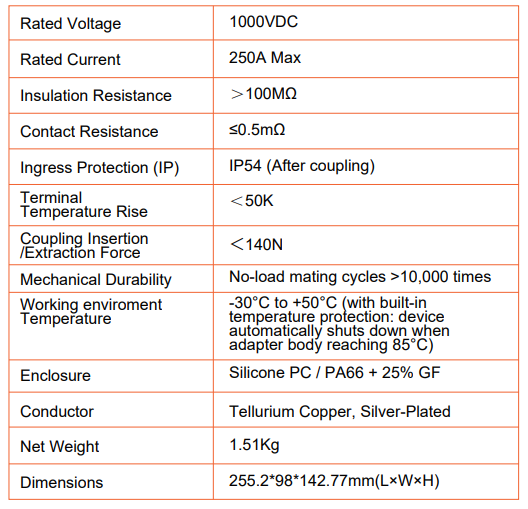
The electrical specifications of a CHAdeMO to CCS1 adapter are critical in determining both usable charging power and vehicle compatibility. Rated voltage, for example, is a key factor; many high-quality adapters support up to 1000V DC to accommodate modern DC fast-charging scenarios. Maximum operating current and overall power rating define the upper limits of what the adapter can safely deliver, directly impacting charging speed and efficiency.Contact resistance is another important consideration. Excessive resistance can lead to energy loss and localized heating, reducing overall efficiency and potentially accelerating component wear. A well-designed adapter maintains low contact resistance to ensure stable, high-power DC delivery while minimizing thermal stress. Products like the OLINK CHAdeMO to CCS1 Adapter demonstrate how careful electrical engineering ensures compatibility across a wide range of vehicles and charging stations without compromising performance.
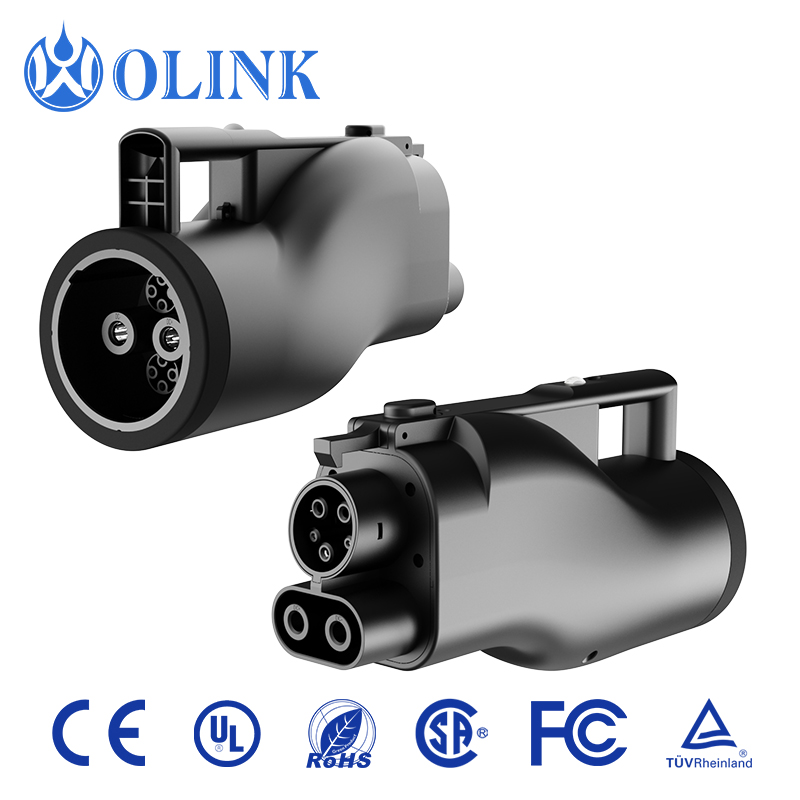
OLINK CHAdeMO to CCS1 Adapter Parameters
Safety and Insulation Performance
Long-term reliability depends on robust safety and insulation characteristics. High insulation resistance prevents leakage currents and ensures user safety, while adequate protection ratings (IP levels) are essential for outdoor fast-charging stations exposed to dust, moisture, and weather fluctuations.
Mechanical durability is equally important. The adapter must withstand frequent plugging and unplugging without degradation, which involves proper control of insertion force and validated mechanical lifespan. These factors determine whether the adapter can sustain repeated daily use in both personal and commercial environments.
Thermal Management and Temperature Protection
Heat management is crucial in DC fast charging, where high currents generate significant thermal stress. Adapters must control temperature rise effectively to prevent overheating and maintain safe operation. Integrated thermal protection systems, such as automatic shutdown at high temperatures, safeguard both the vehicle and the adapter.
Additionally, adapters are designed to remain reliable under extreme environmental conditions, ensuring consistent performance across a wide temperature range. For instance, the OLINK CHAdeMO to CCS1 Adapter incorporates advanced thermal management to maintain operational stability, even in high ambient temperatures, demonstrating the practical importance of comprehensive temperature control in adapter design.
How Material and Structural Design Affect Adapter Performance
Conductor Material Selection
The choice of conductor material is critical in determining both electrical performance and durability. High-quality adapters often use silver-plated tellurium copper for internal contacts, combining excellent conductivity with superior wear resistance. This ensures minimal contact resistance, reduces heat generation during high-current DC fast charging, and prolongs the service life of the adapter. In contrast, low-end adapters using standard copper or low-quality plating may suffer from higher resistance, excessive heating, and accelerated degradation.
Housing Material: Flame Retardancy, Strength, and Weather Resistance
The external housing plays a crucial role in safety and long-term reliability. Premium adapters are made from flame-retardant, impact-resistant, and UV-stable materials, providing protection against mechanical shocks, high ambient temperatures, and prolonged outdoor exposure. Such robust housing ensures the adapter maintains insulation integrity, prevents deformation, and continues to perform safely under harsh environmental conditions—capabilities often lacking in low-cost adapters with weaker or non-rated plastics.
Balancing Size, Weight, and Internal Structure
Structural design also impacts usability and thermal management. High-end adapters carefully balance size, weight, and internal component layout to ensure ergonomic handling, efficient heat dissipation, and mechanical stability. Optimized internal architecture allows for reliable current flow while maintaining compact form factors for user convenience. In contrast, poorly designed adapters may be bulky, heavy, or prone to overheating due to inefficient component arrangement.
By prioritizing high-quality materials and thoughtful structural engineering, a CHAdeMO to CCS1 adapter not only delivers superior electrical performance but also ensures long-term durability, safety, and a premium user experience—clear differentiators from low-end, budget-oriented connectors.
Compatibility Analysis: Not All CHAdeMO Vehicles Can Use CCS1 Chargers
Vehicle BMS Limitations
Even with a CHAdeMO to CCS1 adapter, the vehicle’s Battery Management System (BMS) may impose restrictions on charging voltage, current, or protocol handling. These system-level limits are designed to protect battery health and cannot be bypassed by an adapter. As a result, some vehicles may only accept reduced charging power or may not initiate a charging session at all if their BMS does not recognize the adapted protocol.
Charging Station Firmware and Protocol Compatibility
The firmware of the CCS1 charging station also plays a critical role. Different stations may implement CCS1 communication protocols with subtle variations, which can affect whether a CHAdeMO adapter can successfully negotiate a charging session. Professional-grade adapters incorporate active protocol conversion logic to maximize compatibility, but no adapter can guarantee universal success across all firmware versions.
Public vs. Private DC Charging Stations
Another important factor is the type of DC fast charger. Public stations often have standardized protocols and safety checks, whereas private or industrial chargers may use custom firmware or non-standard configurations. Adapter performance may vary depending on these conditions, and users should verify compatibility in advance to ensure reliable operation.
Key Takeaway
A CHAdeMO to CCS1 adapter enhances flexibility but cannot override system-level safety or protocol constraints. It is a practical solution for expanding charging options, but users and operators must understand its limitations and confirm vehicle and charger compatibility before relying on it for daily operation.
Typical Use Cases for a CHAdeMO to CCS1 Adapter
Public Fast Charging in CHAdeMO-Scarce Regions
In areas where CHAdeMO DC fast chargers are limited, a CHAdeMO to CCS1 adapter enables drivers of CHAdeMO-equipped vehicles to access the broader CCS1 charging network. This ensures that users can maintain mobility even when native CHAdeMO ports are rare, effectively bridging the gap between available infrastructure and vehicle needs.
Legacy Vehicles in CCS1-Dominant Markets
In regions such as North America, where CCS1 has become the standard for new fast chargers, older CHAdeMO vehicles may face charging challenges. The adapter provides a practical solution for extending the usability of these legacy vehicles, allowing them to safely charge at CCS1 stations without requiring modifications to the vehicle or existing infrastructure.
Fleet or Commercial Transitional Compatibility
For fleet operators or commercial EV users managing mixed-standard vehicles, the CHAdeMO to CCS1 adapter serves as a staged compatibility solution. It allows operators to support both CHAdeMO and CCS1 vehicles from a single charging station, minimizing infrastructure costs while ensuring operational flexibility during the transition period between charging standards.
Emergency and Backup Charging
Adapters also play a valuable role in emergency or backup scenarios. Whether a CCS1 vehicle is temporarily in an area with only CHAdeMO chargers or a CHAdeMO port is occupied, the adapter provides a reliable alternative to maintain charging continuity. This flexibility reduces downtime and ensures users can access power when needed most.
Key Considerations When Selecting a CHAdeMO to CCS1 Adapter
Clearly Rated Voltage and Current
When evaluating a CHAdeMO to CCS1 adapter, it is essential to check whether the product clearly specifies its rated voltage and maximum current. These ratings determine the adapter’s compatibility with your vehicle and the charging station, and directly impact the achievable charging power. Choosing an adapter without clear electrical specifications can lead to suboptimal performance or even safety risks.
Comprehensive Safety Protections
A professional adapter should include complete safety features, such as insulation protection, over-temperature cutoff, and stable contact interfaces. These protections safeguard both the vehicle and the user during high-voltage DC fast charging. Products lacking these basic safety mechanisms may expose users to electrical hazards and reduce the adapter’s operational lifespan.
Defined Operating Temperature Range
Environmental suitability is another key consideration. The adapter should have a well-defined operating temperature range to ensure reliable performance in various conditions, from hot summer days to cold winter temperatures. Clear specifications give confidence that the adapter can handle outdoor or commercial usage without failure.
Active Protocol Conversion
Not all adapters perform true active protocol conversion. Only adapters with integrated control logic can translate communication between CHAdeMO and CCS1 safely and reliably. Passive adapters may allow a physical connection but cannot initiate or regulate a real DC fast-charging session, making active conversion a critical factor in professional-grade products.
Suitability for Long-Term and High-Frequency Use
Finally, consider whether the adapter is designed for repeated daily use or long-term operation. Mechanical durability, insertion force, and material quality all affect whether an adapter can withstand frequent plugging and unplugging in public, commercial, or fleet applications. Ensuring long-term reliability separates professional-grade adapters from low-end alternatives.
Is a CHAdeMO to CCS1 Adapter Suitable as a Long-Term Solution?
Users for Whom the Adapter Is Appropriate
A CHAdeMO to CCS1 adapter is ideal for drivers of legacy CHAdeMO vehicles who operate in CCS1-dominant regions, as well as fleet or commercial operators managing mixed-standard EVs. It provides practical compatibility for existing charging networks, extends vehicle usability, and allows for flexible operation without immediate infrastructure upgrades. For these users, the adapter serves as a cost-effective interim solution that maintains mobility and operational efficiency.
Scenarios Where the Adapter May Not Be Suitable
The adapter is not a universal solution. It is less suitable for users who require maximum charging power, since vehicle BMS limits or charger firmware may reduce the achievable current. It is also not ideal as a permanent replacement for infrastructure upgrades in new CCS1-dominant regions, where relying on an adapter long-term may limit performance and convenience. Users seeking the fastest charging speeds or fully standardized interoperability may prefer native CCS1 chargers or vehicle upgrades.
Rational Comparison: Adapter vs. Vehicle or Charger Replacement
When considering solutions, it is important to evaluate adapter use, vehicle replacement, and charger upgrades. Adapters offer a low-cost, temporary bridge, extending the usable life of CHAdeMO vehicles without requiring major investment. Replacing the vehicle or upgrading chargers may provide higher long-term performance and broader compatibility but comes with significantly higher cost and logistical effort. The key is to match the solution to the user’s needs: adapters are best for transitional flexibility, while vehicle or charger replacement suits users seeking long-term optimization.
Conclusion
In regions transitioning to CCS1, a CHAdeMO to CCS1 adapter provides a practical, phase-specific solution. It enhances compatibility, maintains safety, and reduces costs without replacing vehicles or chargers. Adapters are best seen as a supplementary tool, not a permanent substitute, and should be selected based on verified specifications and reliability.
