
As electric vehicles continue to grow in popularity, compatibility and convenience of charging infrastructure have become key concerns for both users and operators. With multiple charging standards coexisting, enabling CCS2-equipped vehicles to charge at CHAdeMO stations has become a practical need. As a professional EV charging equipments manufacturer, many companies provide innovative EV charging solutions designed to enhance the flexibility and coverage of charging networks. By properly integrating an EV charging station with adapters, users can enjoy a more efficient and safer DC fast-charging experience in both everyday and commercial scenarios.
What is a CHAdeMO to CCS2 Adapter?
Brief Introduction to CHAdeMO and CCS2
Electric vehicles rely on fast-charging standards to ensure efficient energy transfer, with CHAdeMO and CCS2 being two of the most common. CHAdeMO is widely used in certain regions, while CCS2 has become the dominant standard in Europe and many other markets. Due to differences in connector design and communication protocols, these two standards are not directly compatible.
Basic Function of the Adapter
A CHAdeMO to CCS2 adapter serves as a bridge between the two standards. It allows CCS2-equipped EVs to charge at DC fast chargers that were originally designed for CHAdeMO, ensuring safe and reliable power delivery without modifying the charging station or vehicle.
Typical Use Cases
This adapter is particularly useful in scenarios where CHAdeMO chargers are available but CCS2 connectors are limited. It is ideal for individual EV owners, public charging networks, and commercial EV charging stations looking to expand compatibility and improve charging flexibility during the transition period between standards.
Why Do You Need a CHAdeMO to CCS2 Adapter?
Charging Standard Trends
The electric vehicle charging landscape is evolving rapidly. In Europe and many emerging EV markets, CCS2 has become the dominant DC fast-charging standard, while the construction of new CHAdeMO charging stations is declining. This shift means that CCS2-equipped vehicles often face limited access to compatible DC chargers, creating a growing need for solutions that bridge the gap between different charging standards.
Real-World Challenges for Users and Operators
EV drivers and charging station operators frequently encounter practical issues. CHAdeMO connectors can be scarce, making it difficult for vehicles relying on this standard to find available chargers. Additionally, many DC fast chargers are designed exclusively for a single standard, which reduces flexibility for mixed fleets or multi-standard charging stations. These challenges emphasize the importance of solutions that enhance compatibility without requiring expensive upgrades or new infrastructure.
How the Adapter Solves These Problems
A CHAdeMO to CCS2 adapter effectively addresses these challenges by expanding the usable DC charging network, allowing CCS2 vehicles to charge at CHAdeMO stations. It improves charging flexibility for both individual users and operators of public or commercial EV charging stations, enabling support for multiple vehicle types without replacing existing chargers. Furthermore, during the ongoing transition from CHAdeMO to CCS2, the adapter serves as a practical interim solution, maintaining convenience and efficiency in the charging ecosystem. By providing seamless interoperability, it plays a key role in creating a more versatile and resilient EV charging network.
Key Differences Between CHAdeMO and CCS2
Regional Usage
CHAdeMO and CCS2 are designed for different markets. CHAdeMO has historically been popular in Japan and parts of Asia, while CCS2 has become the dominant standard in Europe and increasingly in North America. This regional preference affects the availability of compatible charging stations, making adapters essential for cross-standard compatibility.
Connector Design
The two standards feature distinct connector structures. CHAdeMO uses a bulkier, round connector designed for high-current DC charging, whereas CCS2 combines AC and DC pins in a more compact, streamlined design. These physical differences prevent direct connection between vehicles and chargers of different standards, highlighting the need for a dedicated adapter.
Market Adoption
CCS2 has gained wider global adoption in recent years, particularly among new EV models and commercial fleets. CHAdeMO, while still supported by some older and Japanese models, is seeing a decline in new charger installations. This trend makes interoperability solutions like the CHAdeMO to CCS2 adapter increasingly important for both individual users and operators of EV charging stations.
So, CHAdeMO and CCS2 are not directly compatible due to differences in regional usage, connector design, and market adoption. Therefore, using a specialized CHAdeMO to CCS2 adapter is necessary to enable safe and efficient DC fast charging across these standards.
How a CHAdeMO to CCS2 Adapter Works
Basic Function
A CHAdeMO to CCS2 adapter acts as a bridge between the charging station and the electric vehicle. It “translates” the signals and electrical connections from a CHAdeMO DC fast charger to be compatible with a CCS2-equipped EV. This ensures that the charging session can start, maintain stable power delivery, and stop safely without any interruptions or errors.
High Voltage and Current Support
Because DC fast charging involves high voltage and large currents, the adapter must be capable of handling these safely. Typical requirements include support for several hundred volts of DC and high amperage, ensuring the EV receives fast, efficient, and reliable charging while maintaining safety standards.
Manufacturer Example
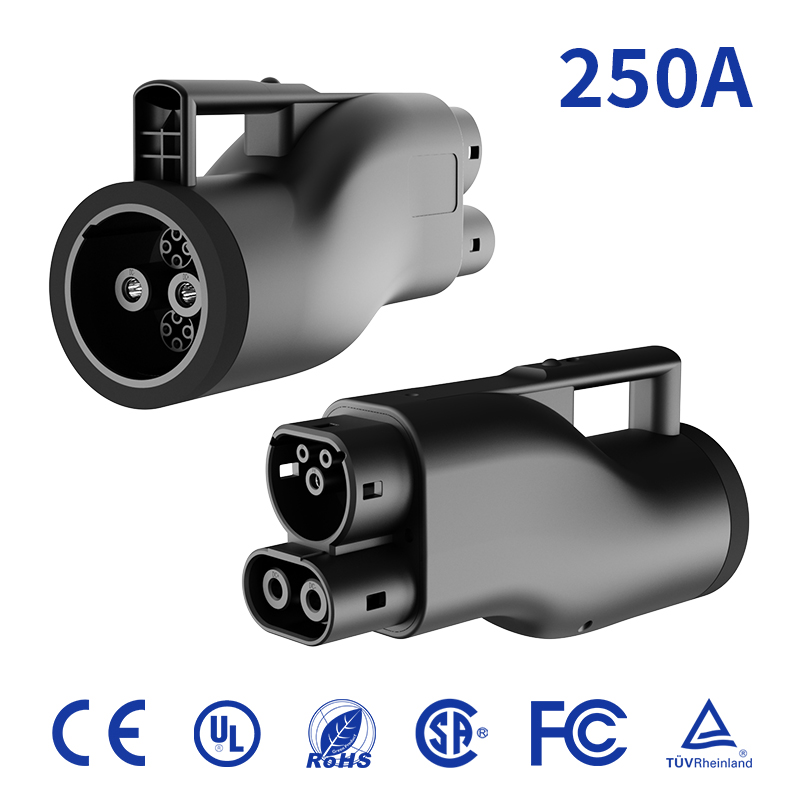
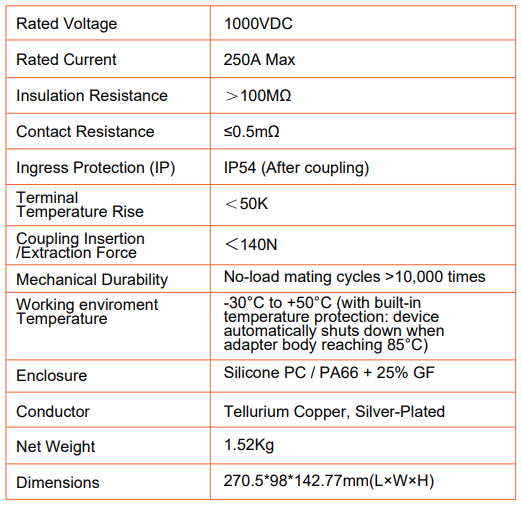
From a manufacturer’s perspective, products like the OLINK CHAdeMO to CCS2 Adapter are designed to meet these demanding conditions. Many of these adapters support up to 1000V DC and 250A, making them suitable for common DC fast-charging scenarios. With proper insulation, temperature control, and robust connector design, such adapters provide both reliability and convenience for users and charging station operators.
OLINK Chademo to CCS2 Adapter Parameters
Safety and Reliability: Why Adapter Quality Matters
High-Voltage DC Charging Requires Strict Safety
DC fast charging involves high voltage and large currents, making safety a critical concern. A low-quality adapter can lead to serious risks such as electrical faults, overheating, or damage to both the vehicle and the charging station. Ensuring that an adapter meets rigorous safety standards is essential for the safety of EV drivers and the reliability of EV charging stations.
Key Factors to Consider
The most important factors for adapter quality include insulation performance, which prevents electrical leakage and protects both the vehicle and the user, and contact stability, which ensures consistent power transfer and reduces wear on connectors over time. Temperature control is also crucial, as over-temperature protection prevents overheating during fast charging sessions. Additionally, dust and water resistance, typically rated IP54 after connection, ensures reliable operation in outdoor or harsh environments.
Typical Design Indicators
High-quality adapters often meet measurable standards that indicate safety and reliability. These include high insulation resistance, low contact resistance, robust temperature management, and durable protective enclosures. Adapters that meet these criteria not only guarantee safe charging but also enhance the durability and lifespan of both the adapter and the EV’s charging system.
Durability and Daily Usage Experience
Smooth Connection and Frequent Use
The durability of a CHAdeMO to CCS2 adapter is essential for everyday use. A high-quality adapter ensures that plugging and unplugging is smooth and effortless, even with repeated daily use. Proper connector design and controlled insertion force prevent wear and tear, making the adapter reliable for both personal and commercial charging environments.
Outdoor Suitability and Environmental Resistance
Adapters used in public or commercial EV charging stations often face harsh conditions, including rain, dust, and temperature extremes. A durable adapter is designed with materials and structures that withstand outdoor environments, ensuring consistent performance and safety under varying weather conditions.
Design and Material Considerations
Key factors affecting durability include the connector’s mechanical lifespan, controlled plug-in force, working temperature range, and overall structural integrity. High-quality materials and precise engineering not only enhance the longevity of the adapter but also improve the daily charging experience by providing a stable, reliable connection every time.
Typical Use Cases
Charging CCS2 Vehicles at CHAdeMO Stations
A CHAdeMO to CCS2 adapter allows CCS2-equipped electric vehicles to charge at existing CHAdeMO DC fast-charging stations. This capability expands the available charging options for drivers and ensures that vehicles can access reliable fast charging even when native CCS2 chargers are limited.
Alternative When CHAdeMO Ports Are Limited
In busy charging environments, CHAdeMO ports may be scarce or occupied. The adapter provides a practical alternative, enabling CCS2 vehicles to utilize CHAdeMO chargers without waiting for native CCS2 connectors. This improves convenience for drivers and maximizes the utilization of existing charging infrastructure.
Support for Older Models and Transition Periods
During the ongoing transition from CHAdeMO to CCS2, many older EV models still rely on CHAdeMO chargers. The adapter serves as a bridge, allowing both legacy and newer CCS2 vehicles to coexist on the same charging network, ensuring smooth adoption of new standards without disrupting users.
Compatibility for Public and Commercial Charging Stations
For operators of public or commercial EV charging stations, the adapter enhances network flexibility and customer satisfaction. By supporting multiple standards with a single charger setup, operators can reduce infrastructure costs, simplify station management, and provide seamless charging experiences for a wide range of vehicles.
How to Choose the Right CHAdeMO to CCS2 Adapter
Support for DC Fast Charging
When selecting a CHAdeMO to CCS2 adapter, the first consideration is whether it supports DC fast charging. Not all adapters are designed for high-voltage, high-current applications, so choosing one that can handle fast-charging sessions ensures efficient energy transfer and reduces charging time for your EV.
Voltage and Current Ratings
It is essential to check the adapter’s maximum voltage and current capabilities. A high-quality adapter should match or exceed the specifications of your vehicle and charging station to maintain safe and stable operation. This ensures compatibility across a wide range of DC fast-charging scenarios.
Safety Features
Safety is a critical factor in adapter selection. Ensure that the adapter includes basic protections such as insulation, over-temperature protection, and stable electrical contacts. These features prevent electrical faults, overheating, and potential damage to both the vehicle and the charging station.
Suitability for Local Conditions
Consider whether the adapter is suitable for your local environment. Factors such as outdoor weather conditions, temperature ranges, and exposure to dust or moisture affect the adapter’s reliability. Choosing an adapter designed for local usage conditions helps maintain performance and longevity.
Manufacturer Experience
Finally, selecting an adapter from an experienced EV charging equipment manufacturer is important. Established manufacturers are more likely to meet rigorous safety standards, provide reliable technical support, and offer products tested for durability and real-world performance.
Usage Considerations and Limitations
Compatibility Limitations
While a CHAdeMO to CCS2 adapter provides valuable flexibility, it is important to note that not all vehicles and charging stations are fully compatible. Some EV models or older charging stations may have limitations that prevent optimal performance, so checking compatibility before use is essential to avoid charging interruptions or errors.
Charging Power May Be Limited
The actual charging power when using an adapter may be constrained by the vehicle’s capabilities. Even if the adapter and charging station support high-voltage DC fast charging, the EV itself may limit the maximum current, resulting in slower charging than the theoretical maximum. Users should be aware of this factor when planning charging sessions.
Adapter as a Supplement, Not a Replacement
It is important to understand that the adapter serves as a supplementary solution rather than a replacement for native charging interfaces. While it greatly enhances compatibility and flexibility, relying solely on an adapter cannot fully replace the performance and reliability of a dedicated CCS2 charger. The adapter is best used to bridge gaps during the transition period or in mixed-standard charging environments.
Conclusion
The CHAdeMO to CCS2 adapter remains a valuable solution in today’s EV charging market, providing essential compatibility for CCS2-equipped vehicles at CHAdeMO DC fast chargers. It is ideal for both drivers seeking greater charging flexibility and operators of public or commercial EV charging stations aiming to support diverse vehicle models. Prioritizing reliable, safe, and well-designed adapters over low-cost alternatives ensures long-term performance, user safety, and a seamless charging experience, making it a smart choice for bridging different charging standards.
If you want to learn more our adapters, please refer to our adapter serise.
