
Electric vehicle chargers are high-power electrical systems that operate under continuous load and are directly exposed to grid instability, environmental stress, and user interaction. Unlike conventional household appliances, EV chargers must handle sustained current flow, dynamic load variation, and frequent connection cycles, all of which accelerate component aging and increase failure probability.
In this context, protection is not a single feature but a system-level engineering framework. A reliable EV charging solution must integrate electrical protection, environmental resilience, mechanical durability, and intelligent control to ensure long-term performance and operational safety. Without such a structured approach, chargers are vulnerable to transient overvoltage, insulation breakdown, overheating, and physical damage, ultimately leading to reduced lifespan and higher maintenance costs.
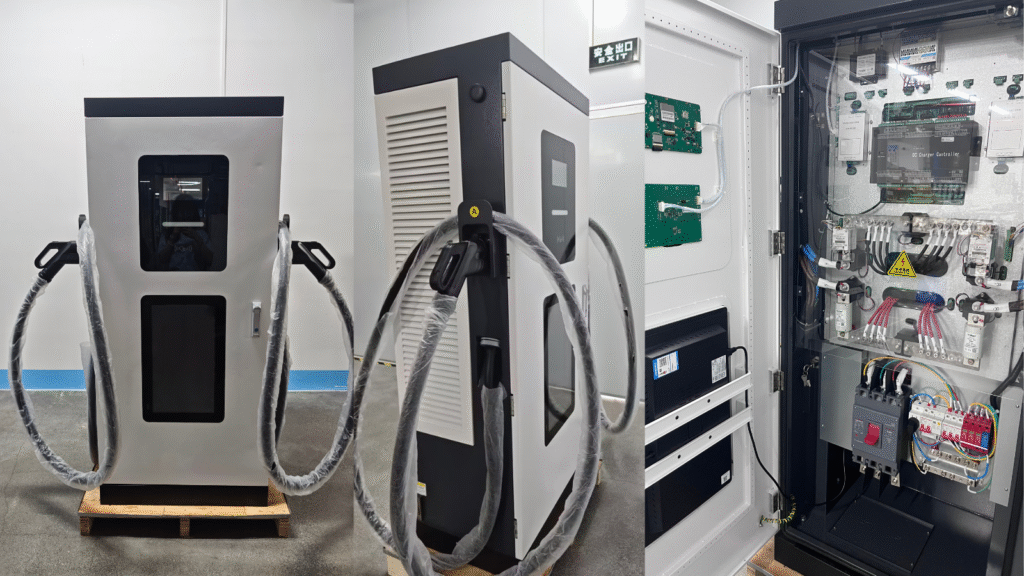
Electrical Protection: Core Safeguards for System Integrity
The electrical protection layer forms the foundation of EV charger safety. One of the most critical risks in charging systems is transient overvoltage, typically caused by lightning strikes or grid switching events. These surges can instantly damage sensitive electronic components such as control boards and power modules. To mitigate this risk, surge protection devices must be installed at the distribution level, ensuring that excessive voltage is diverted away from the charger before it reaches critical circuitry.
Equally important is ground fault protection. Ground Fault Circuit Interrupters continuously monitor current imbalance between live and neutral conductors. When leakage current is detected, the system disconnects power within milliseconds, effectively preventing electric shock and reducing fire hazards. This type of protection is not only a best practice but also a requirement in many international safety standards.
In addition, stable circuit design plays a crucial role. EV chargers should always be connected to dedicated circuits with sufficient capacity, typically in the range of 40 to 60 amps for Level 2 systems. Proper grounding, compliant wiring, and coordination with upstream protection devices are essential to maintain electrical stability and avoid long-term degradation of internal components.
Environmental Protection: Managing External Stress Factors
Environmental exposure is one of the most underestimated factors affecting EV charger reliability. Outdoor installations must withstand rain, dust, humidity, and ultraviolet radiation, all of which can compromise enclosure integrity and internal electronics over time. To address these challenges, chargers must be designed with appropriate ingress protection ratings. For most outdoor scenarios, a minimum of IP54 is required, while harsher environments demand IP65 or higher to ensure complete resistance against dust and water intrusion.
Temperature variation introduces another layer of complexity. Charging systems generate heat during operation, and excessive ambient temperatures can accelerate thermal stress, leading to efficiency loss and component aging. Conversely, extremely low temperatures reduce cable flexibility and may affect connection reliability. Advanced EV chargers incorporate thermal sensors and protection algorithms that dynamically adjust power output or initiate shutdown procedures when temperature thresholds are exceeded. This ensures safe operation across a wide range of environmental conditions.
Mechanical Protection: Reducing Physical and Structural Risks
Mechanical durability is a critical yet often overlooked aspect of EV charger protection. Among all components, charging cables are particularly vulnerable due to repeated handling, bending, and exposure to external forces. Improper cable management, such as sharp bending, dragging on the ground, or vehicle overrun, can lead to insulation damage and eventual failure.
A well-designed system incorporates proper cable routing, strain relief mechanisms, and dedicated storage solutions such as hooks or retractable systems. Maintaining an appropriate bending radius is essential to prevent internal conductor fatigue and ensure long-term usability.
In addition to cable protection, physical security must be considered, especially in public or semi-public installations. Chargers installed in parking areas are exposed to collision risks and potential vandalism. Protective measures such as bollards, reinforced enclosures, and controlled access systems significantly reduce the likelihood of accidental or intentional damage. These measures are essential for maintaining operational continuity in commercial deployments.
Smart Protection: Intelligent Control and System Monitoring
Modern EV chargers are increasingly equipped with intelligent control systems that enhance both safety and performance. These systems continuously monitor key parameters such as current, voltage, and temperature, enabling real-time response to abnormal conditions.
Load management is one of the most valuable smart features. By dynamically adjusting charging power based on available capacity, the system prevents circuit overload and improves energy efficiency. Thermal monitoring functions allow the charger to detect overheating conditions and automatically reduce output or shut down when necessary, protecting internal components from damage.
Remote monitoring capabilities further extend protection by enabling users and operators to track charger status, receive fault alerts, and perform diagnostics through mobile applications or cloud platforms. This transforms maintenance from a reactive process into a predictive strategy, significantly reducing downtime and operational risk.
Operational Strategy: Preventive Maintenance and Best Practices
Even the most advanced protection systems require proper operational support to maintain long-term reliability. Preventive maintenance plays a key role in identifying early signs of wear and avoiding major failures. Regular inspection should focus on connector integrity, cable condition, and the stability of electrical connections.
Cleaning is another essential aspect of maintenance. Dust and debris accumulation can affect both thermal performance and electrical insulation. Chargers should be cleaned periodically using dry, non-abrasive materials, while high-pressure water or chemical agents should be avoided to prevent damage to seals and surfaces.
Professional inspection on an annual basis is recommended, particularly for commercial installations. This ensures compliance with safety standards and helps identify hidden issues that may not be visible during routine checks.
Indoor vs. Outdoor Deployment: Differentiated Protection Requirements
The protection strategy for EV chargers varies significantly depending on the installation environment. Indoor chargers benefit from controlled conditions and are less exposed to environmental stress, allowing a primary focus on electrical safety and system stability. However, outdoor chargers require a more comprehensive protection framework that addresses environmental exposure, mechanical impact, and security risks simultaneously.
Outdoor installations must integrate weatherproof enclosures, enhanced ingress protection, robust cable management, and physical protection measures. In such scenarios, protection should be viewed as a layered system rather than a single solution, ensuring resilience against multiple risk factors.
Lifecycle Optimization: From Protection to Cost Efficiency
A well-designed protection strategy directly impacts the total lifecycle cost of an EV charger. While initial investment in protection measures such as surge devices, enclosures, and monitoring systems may increase upfront cost, it significantly reduces long-term expenses associated with repairs, downtime, and equipment replacement.
Typically, EV chargers can achieve a service life of 7 to 15 years under proper conditions. However, inadequate protection can drastically shorten this lifespan. By adopting a proactive approach that combines engineering design, intelligent control, and preventive maintenance, operators can maximize return on investment and ensure consistent system performance.
Conclusion: Building a Multi-Layer Protection Architecture
EV charger protection must be understood as a comprehensive engineering system rather than a collection of isolated features. Effective protection integrates electrical safeguards, environmental resistance, mechanical durability, intelligent monitoring, and operational discipline into a unified architecture.
Only through this multi-layer approach can EV charging infrastructure achieve high reliability, extended service life, and optimal safety performance. As EV adoption continues to accelerate, the importance of robust charger protection will become increasingly critical, not only for individual users but also for large-scale commercial and public charging networks.
